I took over as anesthesia supervisor a few weeks ago. My predecessors planned ahead and successfully managed to bring in experienced anesthesiologists for
my start. No « green on green » (I heard that in aviation, they avoid pairing an inexperienced captain with an inexperienced co-pilot). I think it’s working well. In any case, they are doing an amazing job. As for me, I am discovering the other facets of anesthesia: what strategy to adopt for patients during « screenings »—what are the limits, what can we reasonably do with the resources on board (both literally and figuratively!), « borderline » cases are presented to me… and I have to make the call. By the way, when all the anesthesiologists are in the OR, I carry the on-call pager (on top of my own, which I always have). If there’s a medical emergency or a critical situation, I run to see what’s going on (my intervention is often not necessary, but I have to go check). Beyond the « hierarchical » aspect, there is also the fact that doctors who stay on board for several months or
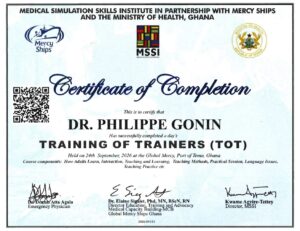
years are few and far between. So we also have a role in knowing what goes on behind the scenes and how to manage situations beyond immediate intervention. And then… there are the unexpected requests. Training everyone who comes on board as « students » so they leave with a BLS certificate. It might sound « basic » (the course is called Basic Life Support), but you need trained instructors to teach it. And that’s where they also asked me, given my long-term commitment on board, to train as an instructor.
my start. No « green on green » (I heard that in aviation, they avoid pairing an inexperienced captain with an inexperienced co-pilot). I think it’s working well. In any case, they are doing an amazing job. As for me, I am discovering the other facets of anesthesia: what strategy to adopt for patients during « screenings »—what are the limits, what can we reasonably do with the resources on board (both literally and figuratively!), « borderline » cases are presented to me… and I have to make the call. By the way, when all the anesthesiologists are in the OR, I carry the on-call pager (on top of my own, which I always have). If there’s a medical emergency or a critical situation, I run to see what’s going on (my intervention is often not necessary, but I have to go check). Beyond the « hierarchical » aspect, there is also the fact that doctors who stay on board for several months or
years are few and far between. So we also have a role in knowing what goes on behind the scenes and how to manage situations beyond immediate intervention. And then… there are the unexpected requests. Training everyone who comes on board as « students » so they leave with a BLS certificate. It might sound « basic » (the course is called Basic Life Support), but you need trained instructors to teach it. And that’s where they also asked me, given my long-term commitment on board, to train as an instructor.
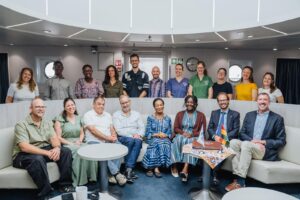
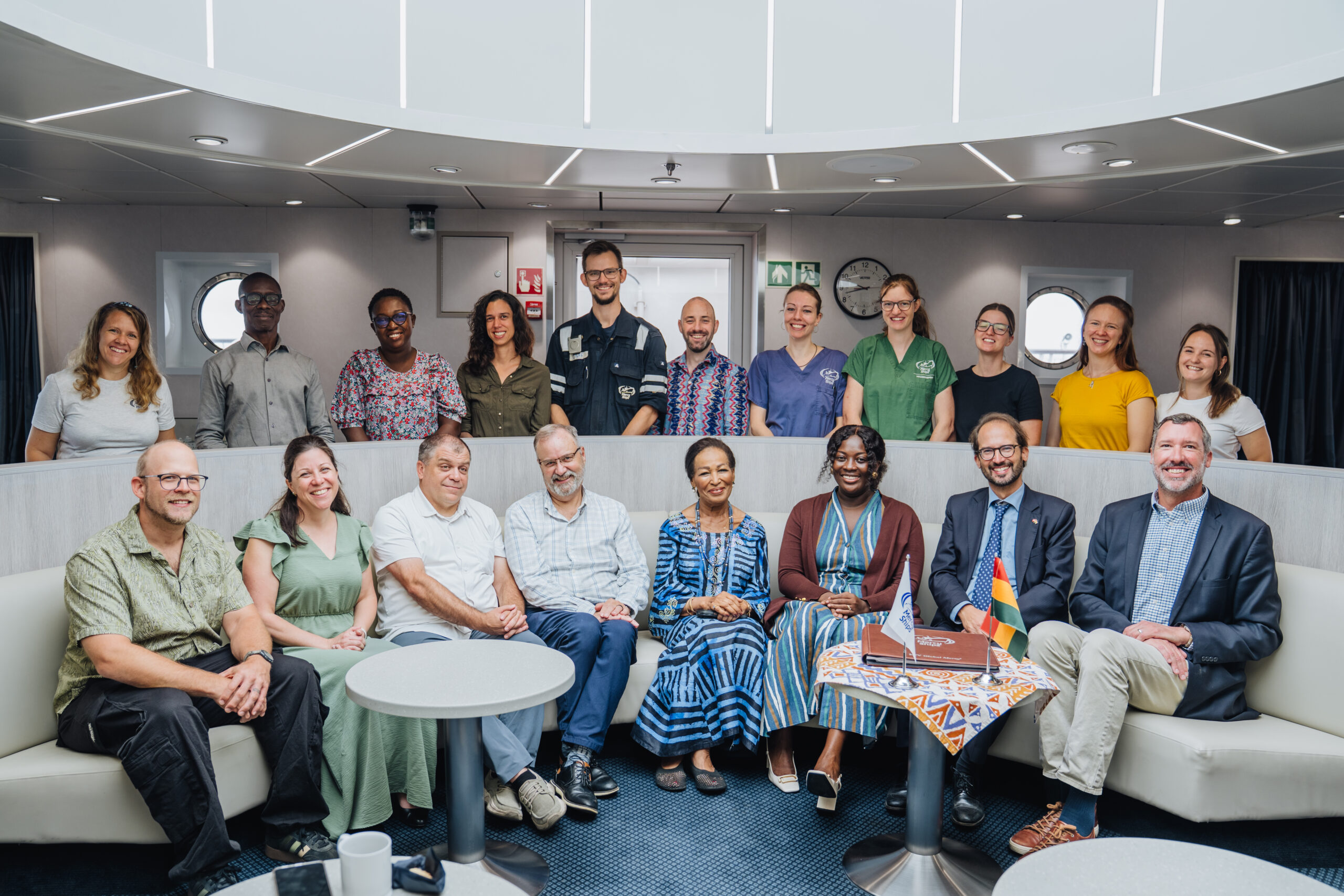
Done and dusted this week. Oh, and in parallel, we had a visit from the Swiss Ambassador to Ghana.
Even though we are staying in port, I am navigating between proactive clinical questions, responding to acute emergencies, classes to become an instructor,
and consequently, teaching lessons as such. At the same time, I put together the anesthesia teams to meet the needs of each operating room. And on Saturday morning (or pretty much all day), I was triangulating between the purser and one of my anesthesiologists who was stuck at the airport due to a visa issue. Oh, and… while I learned to improvise training sessions on the fly with « my » army unit, where my colleagues and I complement each other and things just « roll »… being an instructor with strangers, let alone from different cultures like Africa, means you can’t always step in or intervene the way my « achiever » side (referring to CliftonStrengths) pushes me to do. Same thing during the ambassador’s visit: diplomacy is clearly not my strong suit. At least I’m aware of it…
and consequently, teaching lessons as such. At the same time, I put together the anesthesia teams to meet the needs of each operating room. And on Saturday morning (or pretty much all day), I was triangulating between the purser and one of my anesthesiologists who was stuck at the airport due to a visa issue. Oh, and… while I learned to improvise training sessions on the fly with « my » army unit, where my colleagues and I complement each other and things just « roll »… being an instructor with strangers, let alone from different cultures like Africa, means you can’t always step in or intervene the way my « achiever » side (referring to CliftonStrengths) pushes me to do. Same thing during the ambassador’s visit: diplomacy is clearly not my strong suit. At least I’m aware of it…
The regional expression (probably from Vaud) after a week like this would be « non mais j’te jure » (unbelievable)… but I don’t swear (« jurer ») 😉 I pray, and I
tell myself that I am going to learn so much more than just « medicine » over the next few years!
tell myself that I am going to learn so much more than just « medicine » over the next few years!
Looking forward to continuing this « medical » shipboard blog adventure! What do you do with a patient who has a systolic pressure of 210 mmHg on the morning of their surgery? How do you perform a stress test on board a ship? I don’t plan on turning this blog into an educational lecture, but rather sharing my feelings and experiences from the medical side of things…