As cultures are different, you discover many different ways to do things, to see things, and to resolve problems.
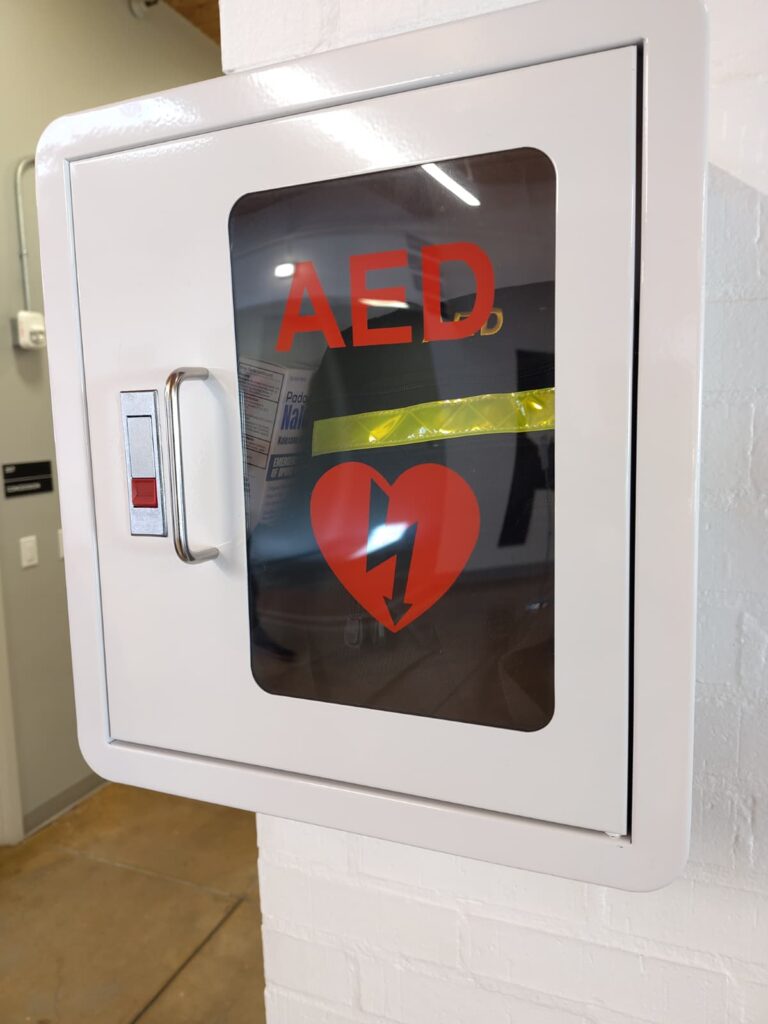
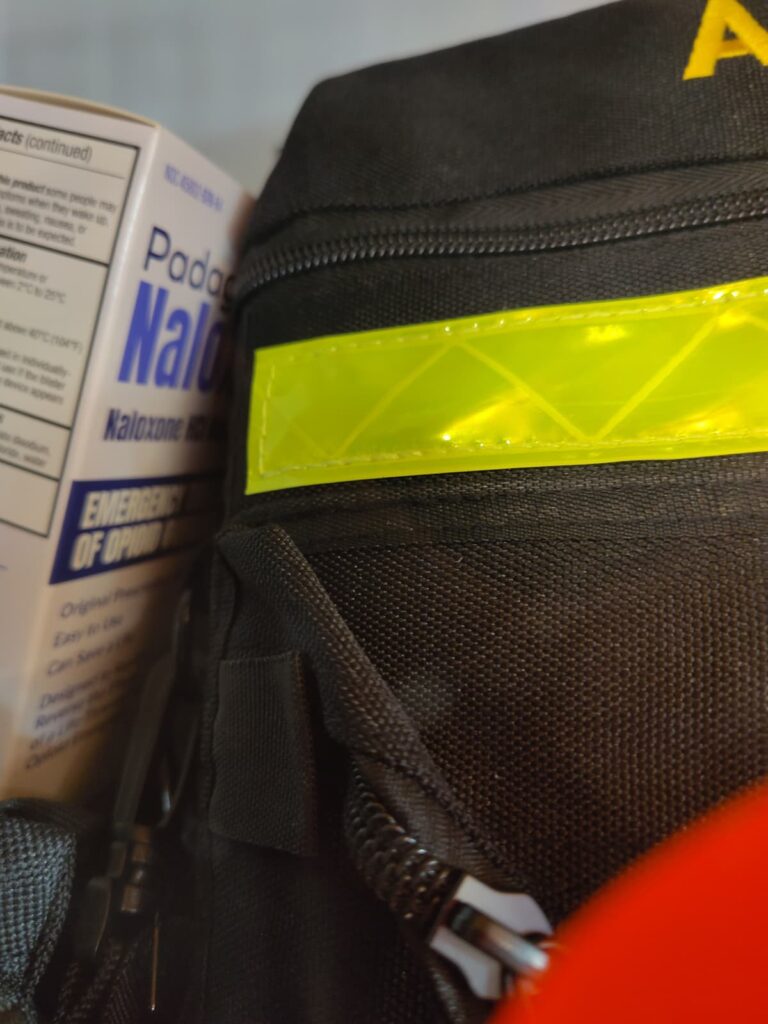
During our survival course in the pool, I looked through the little windows of the AED « box » on the wall. Something caught my eye: squeezed next to the
AED inside the box, a small cardboard box had been slipped in-a Narcan (Naloxone) nasal spray is stored alongside the AED.
Without having done a complete literature review, I quickly found that 76% of all overdose deaths involved opioids in the USA (2023). The effectiveness
of Naloxone in cardiac arrest is unclear, especially if you provide artificial ventilation. But it highlights the problem that opioid misuse represents in some countries. I was already aware of it, since when I wanted to give Fentanyl in a rescue setting in Switzerland to an American wounded person, they started to cry simply upon hearing the name Fentanyl.
This made me think about two things:
- Follow your algorithm: when you treat a cardiac arrest, even if it is due to an opioid overdose, you will treat it correctly if you follow
basic CPR, which also provides ventilation. But, in an advanced setting, think about the reversible causes of cardiac arrest, which include « toxins ».
And when you arrive at this, you will probably have indicators leading you to give Naloxone. In a setting where an opioid overdose is highly likely to
be the cause of the cardiac arrest, having and using Naloxone is probably also a good way, in addition to CPR, to give the patient a better chance to
survive. - It is important to know-or at least to listen to-your patient and their culture. If you give a painkiller to a patient who needs it under
medical control, it defeats the purpose of the treatment if you induce a panic attack. You have to take this into account and explain to the patient especially well what you’re doing and why.
Writing this in my blog, I have to think about it, as I will be treating patients in a totally different culture in a few weeks, when I join the GlobalMercy and we reach Ghana!
This represents my personal opinion. Do not use this information to make treatment decisions!
See :
- drugabusestatistics.org/drug-overdose-deaths/
- Opioid-associated cardiac arrest: A systematic review of intra-arrest naloxone and other opioid-specific advanced life-support therapies,
Resuscitation Plus, Volume 22, March 2025, 100906 <www.sciencedirect.com/journal/resuscitation-plus/vol/22/suppl/C> ,